By MechanicTap Team · Updated Nov 4, 2026 · 8 min read
Mobile Mechanic Trip Fees: What to Charge and How to Explain It
A trip fee should pay for the round-trip vehicle cost and some or all of your drive time. Use one clear system, publish it before the visit, and show it as its own line on every quote.
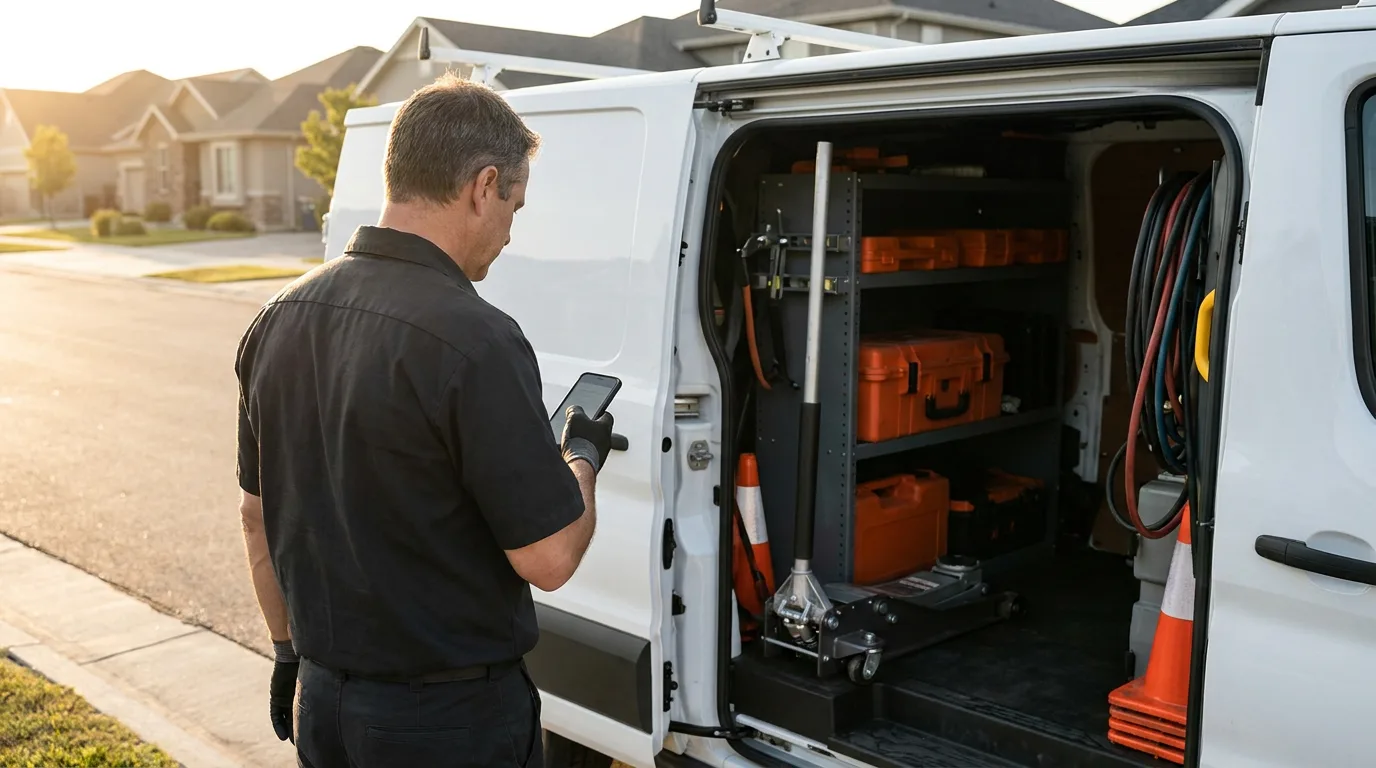
A mobile mechanic trip fee should cover the round-trip cost of the service vehicle plus some or all of the time spent driving. You can charge one local fee, use distance zones, or quote long trips individually. Keep the fee separate from repair labor, state whether it is credited toward approved work, and show it on the written quote before you dispatch.
The full mobile mechanic pricing guide explains labor and parts markup. This guide stays focused on the drive, the minimum visit, and the wording customers see.
MechanicTap's quotes and deposits workflow keeps labor, parts, and the mobile service fee on separate lines, then lets the customer approve the quote before paying a card deposit. The same separation works in any written quoting system.
Is a trip fee the same as a service-call fee?
A trip fee, service-call fee, mobile service fee, and call-out fee usually describe the charge for bringing the business to the vehicle. The name matters less than the definition. Pick one term, use it consistently, and explain exactly what it includes.
| Charge | Purpose | Customer should know |
|---|---|---|
| Trip or mobile service fee | Travel time and service-vehicle cost | Service area, amount, and credit policy |
| Diagnostic fee | Testing and professional judgment | Time included and whether diagnosis is credited |
| Repair labor | Hands-on repair time | Flat price or hours times the labor rate |
| Parts | Parts plus sourcing and warranty handling | Customer price, brand, and warranty |
How do you calculate a mobile mechanic trip fee?
Calculate a trip fee from two numbers: the round-trip vehicle cost and the value of the drive time. The IRS business mileage rate can be a useful vehicle-cost benchmark, but it is a tax figure, not a required customer price. Replace it with your own actual cost per mile if you track fuel, maintenance, tires, depreciation, registration, and insurance.
- 1Measure the round-trip miles from your normal dispatch point.
- 2Multiply those miles by your vehicle-cost benchmark.
- 3Estimate the round-trip drive time at the hours when you usually work.
- 4Choose how much of that drive time the customer must cover.
- 5Add parking, tolls, or access charges that apply to that job.
- 6Round to a clean published amount and check it against real trips every month.
Example only: a customer is 15 miles away, so the round trip is 30 miles. At a 76-cent vehicle-cost benchmark, the vehicle portion is $22.80. If the round trip takes one hour and you charge half of an $80 labor rate for drive time, that adds $40. The calculated fee is $62.80, which could become a published $60 or $65 zone fee.
Should you use a flat fee, mileage, or distance zones?
Distance zones are usually the easiest system for customers to understand and for a mechanic to quote quickly. One flat fee works when the service area is compact and drive times are predictable. Per-mile pricing is precise but can feel uncertain until the customer knows the final distance.
| Example zone | Example fee | Policy |
|---|---|---|
| 0 to 10 miles | $40 | Normal local service area |
| More than 10 to 20 miles | $60 | Longer drive, quoted before dispatch |
| More than 20 to 30 miles | $80 | Accept only when the job value supports the trip |
| Beyond 30 miles | Custom or decline | Check drive time, return trip, tolls, and parts availability |
Build zones from real round-trip drive time, not map distance alone. Ten miles in city traffic can cost more than twenty highway miles. If your schedule crosses toll roads, downtown parking, gates, or paid access, quote those items separately.
Should you credit the trip fee toward the repair?
Crediting the trip fee is a sales decision, not a requirement. Your policy should protect the drive cost and be simple enough that the customer can predict the final total.
| Policy | Best when | Risk to watch |
|---|---|---|
| No credit | The fee strictly pays for travel and the repair labor is priced separately | Explain it before dispatch so the customer does not feel charged twice |
| Full credit | Approved repairs have enough margin to absorb the drive | Small repairs may stop covering travel |
| Partial or threshold credit | You want an incentive only on larger approved jobs | More rules are harder to explain and enter correctly |
What should the trip-fee wording say?
Trip-fee wording should name the amount, the distance zone, what the fee covers, when it is earned, and whether it is credited. Put the same wording on the booking confirmation, estimate, and cancellation policy.
Do not call the fee refundable, credited, or waived unless your quote math shows exactly what happens. The FTC recommends a written estimate that identifies the repair condition, parts, and anticipated labor and says the business will get approval before exceeding a stated amount.
How should diagnosis and a minimum charge fit with the trip fee?
A minimum visit charge combines the trip fee with the smallest diagnostic or labor block you will sell. That keeps quick fixes from turning into unprofitable drives. For example, a $60 trip fee plus a half-hour minimum at an $80 labor rate creates a $100 minimum visit. The numbers are examples; use your own costs.
Show the customer both lines even when you collect them together. A separate trip line proves the drive is not hidden inside diagnosis, while a separate diagnostic line shows the customer paid for testing and judgment rather than a guaranteed repair.
When should you collect the trip fee?
Collect the trip fee or a deposit before buying parts or dispatching when a cancellation would leave you with a real loss. The written policy should say when the fee becomes nonrefundable and what happens when you cancel, weather makes the job unsafe, the customer gives the wrong location, or the vehicle is unavailable.
A quote in MechanicTap can show labor, parts, and the mobile service fee as separate lines, then collect a card deposit after the customer approves it. Whatever tool you use, save the approved quote, payment receipt, cancellation policy, and messages together.
How do you know the trip fee is high enough?
Review the fee with actual jobs. Track miles, drive minutes, parking, tolls, cancellations, and the percentage of the day spent off the clock. Raise or narrow the service area when the average trip does not cover itself; do not try to make an unprofitable radius work by rushing the repair. If long drives keep eating the day, the guide on how far a mobile mechanic should travel for a job shows how to set drive-time zones and a minimum job size.
Frequently asked questions
What is a normal mobile mechanic trip fee?
There is no reliable national fee that fits every market. Calculate the round-trip vehicle cost and drive time, then compare your result with local customer expectations and publish the amount before dispatch.
Is a trip fee taxable?
Tax treatment varies by state and sometimes by how the fee is connected to taxable parts or services. Ask your state revenue agency or tax professional and configure the quote consistently.
Can I charge both a trip fee and a diagnostic fee?
Yes, when the trip fee pays for travel and the diagnostic fee pays for testing. Explain both lines before the visit and avoid describing either one as repair labor.
Should I waive the trip fee for repeat customers?
Only when the repeat business or route efficiency covers it. A better option may be a defined local zone or a credit on approved repairs so the policy stays consistent.
How far should a mobile mechanic travel?
Travel only as far as the round-trip fee and expected job value cover the time, vehicle cost, and schedule disruption. Long-distance jobs should be quoted individually or declined.
Sources
- 1.Standard mileage rates (IRS)
- 2.Topic no. 510, Business use of car (IRS)
- 3.Auto repair basics (Federal Trade Commission)
- 4.Write It Right: Documentation and authorization requirements (California Bureau of Automotive Repair)
- 5.Automotive Service Technicians and Mechanics, Occupational Outlook Handbook (U.S. Bureau of Labor Statistics)
This guide is general information, not legal, tax, or insurance advice. Rules vary by state and city, so check with your state, a tax professional, or a licensed agent before you decide.